
PTE Accepted Universities in Canada 2026

PTE Accepted Universities in Canada
Planning to study in Canada and wondering which universities accept PTE Academic? PTE Academic is accepted by many Canadian universities and colleges as proof of English-language proficiency for international students.
Pearson currently states that universities and colleges across Canada accept PTE Academic for study, while individual institutions set their own admission requirements and minimum scores.
The required PTE score can vary by university, program, and level of study. For example, the University of British Columbia lists an overall PTE Academic requirement of 65 with minimum scores of 60 in each skill. In contrast, the University of Toronto lists 65 overall with no component below 60.
This guide explains PTE accepted universities in Canada, typical score requirements, PTE Academic vs PTE Core, how to check university requirements, and how to prepare for your test in 2026.

Quick Answer: Does Canada Accept PTE Academic?

Yes. PTE Academic is accepted by many Canadian universities and colleges for study applications.
Pearson says PTE Academic is accepted for study in Canadian universities and colleges, and its Canada destination information lists institutions including the University of Toronto, the University of British Columbia, and McGill University.
However, acceptance does not mean that every university or program requires the same score. You should always check the English-language requirement for your specific institution and program before sending your PTE score.
For Canadian immigration purposes, the situation is different. PTE Core, rather than PTE Academic, is the PTE test used for Canadian permanent residence and citizenship routes recognized by IRCC.

PTE Accepted Universities in Canada

The following Canadian universities publish PTE Academic requirements for English-language proficiency.

University PTE Academic requirement Important note
University of British Columbia (UBC) 65 overall Minimum 60 in Reading, Listening, Writing, and Speaking
University of Toronto 65 overall No component below 60
McGill University 65 overall Individual components 60 or better
University of Waterloo 63 overall 65 in Writing and Speaking
University of Alberta 61 overall Minimum 60 in each band
McMaster University 60 overall Minimum 60 in Writing and Speaking
Toronto Metropolitan University 60 overall Program-specific requirements may apply

These are published institutional requirements, but they should not be treated as universal scores for every program. Requirements can differ between undergraduate, graduate, and professional programs.

PTE Score Requirements for Canadian Universities

There is no single PTE score that guarantees admission to a Canadian university.
Many universities publish a minimum overall score together with minimum component requirements. This means that achieving the overall score alone may not be enough.
For example:

  • UBC: 65 overall, with at least 60 in each skill.
  • University of Toronto: 65 overall, with no component below 60.
  • McGill University: 65 overall, with individual components of 60 or better.
  • University of Waterloo: 63 overall, with 65 in Writing and Speaking.
  • University of Alberta: 61 overall, with a minimum band score of 60.
  • McMaster University: 60 overall, with minimum scores of 60 in Writing and Speaking for its undergraduate English proficiency requirement.
  • Toronto Metropolitan University: 60 for its listed undergraduate programs.

Because requirements can change, always verify the score directly on the university’s official admissions page before applying.

PTE Score for Undergraduate Admission in Canada

International students applying for bachelor’s or other undergraduate programs may be able to use PTE Academic to demonstrate English proficiency.
However, the required score depends on the university and program.
For example, UBC currently lists:

  • Overall PTE Academic: 65
  • Reading: 60
  • Listening: 60
  • Writing: 60
  • Speaking: 60

UBC also states that applicants must achieve these minimum scores in a single sitting.
McMaster University currently lists 60 overall, with minimum scores of 60 in Writing and Speaking for its undergraduate English proficiency requirement.
Therefore, students should not assume that one PTE score applies to every Canadian undergraduate program.

PTE Score for Master’s and Graduate Programs in Canada

Graduate programs can have different English-language requirements from undergraduate programs.
For example, the University of Alberta’s Faculty of Graduate & Postdoctoral Studies lists a minimum PTE Academic score of 61 overall with a minimum band score of 60. However, individual departments can require higher scores.
Toronto Metropolitan University lists 63 PTE Academic as its general graduate requirement, while some programs have higher requirements. For example, its published 2026 graduate requirements list 68 for some MBA and management programs and 72 for Journalism.
This is why students applying for an MS, MBA, or another graduate qualification should check the requirements for the exact program rather than relying only on the university-wide minimum.

PTE Score for MBA in Canada

MBA programs can have additional admission requirements, including higher English-language scores.
For example, Toronto Metropolitan University’s 2026 graduate admission information lists a 68 PTE Academic requirement for its MBA and certain other programs.
Other Canadian business schools may publish different requirements.
If you are applying for an MBA, check:

  1. The university’s general English-language requirement.
  2. The MBA program’s specific requirement.
  3. Academic eligibility.
  4. Work experience requirements, if applicable.
  5. Application deadlines.
  6. Any additional documents required by the business school.

Meeting the English-language minimum does not by itself mean that you will be admitted.

PTE Academic vs PTE Core for Canada

One of the most important things to understand before taking the test is the difference between PTE Academic and PTE Core.

PTE Academic

PTE Academic is designed for academic English and is used by universities and colleges for study applications. Pearson states that PTE Academic is accepted by Canadian universities and colleges.
If your goal is to study at a Canadian university or college, PTE Academic is the relevant PTE test to check with your institution.

PTE Core

PTE Core is a general English test designed for Canadian immigration and citizenship purposes.
Pearson states that PTE Core is recognized by the Canadian government for Canadian permanent residence and citizenship applications.

Your goal PTE test to check
Study at a Canadian university PTE Academic
Study at a Canadian college PTE Academic
Canadian permanent residence PTE Core
Canadian citizenship PTE Core

Do not choose a test simply because both contain the name “PTE.” Always confirm which test your institution or immigration program requires.

Is PTE Academic Accepted for a Canadian Study Permit?

PTE Academic acceptance by a university and study-permit requirements are two separate considerations.
To study in Canada, most international students need a study permit. Canada requires a letter of acceptance from a Designated Learning Institution (DLI) when applying for a study permit.
The Canadian government maintains an official DLI list that allows students to check whether an institution is designated to host international students.
Therefore, your process generally involves:
Choose a program → Check PTE acceptance → Meet academic and English requirements → Receive your Letter of Acceptance → Check study-permit requirements → Apply for your study permit
PTE acceptance alone does not guarantee admission or a study permit.

PTE Acceptance Does Not Mean Guaranteed Admission

Finding your university on a list of PTE accepted universities in Canada is only the first step.
Universities can consider several admission requirements, including:

  • Academic qualifications
  • Previous study
  • Program prerequisites
  • English-language proficiency
  • Application documents
  • Program-specific requirements
  • Application deadlines
  • Available places

For example, Toronto Metropolitan University explicitly notes that meeting minimum requirements does not guarantee admission and that individual programs may have additional requirements.
Therefore, think of the PTE score as one part of your university application, not the only admission criterion.

How to Check Whether a Canadian University Accepts PTE

Before booking your PTE test, follow these steps.

1. Choose Your University

Start with the universities and programs you are interested in.

2. Check the Official Admission Page

Go to the university’s official admissions website and find its English-language proficiency requirements.

3. Look for PTE Academic

Check whether Pearson Test of English Academic (PTE Academic) is listed among the accepted English tests.

4. Check the Required Score

Look for:

  • Overall PTE score
  • Reading requirement
  • Listening requirement
  • Speaking requirement
  • Writing requirement

5. Check Program-Specific Requirements

Some programs may require a higher score than the general university requirement.

6. Check Score Validity

Confirm how recently the test must have been taken.

7. Send Your Official Score

Follow the university’s instructions for submitting your PTE result.
For example, the University of Toronto requires PTE results to be submitted electronically through the MyPTE account.

How to Check Your PTE Score Before Applying

Before sending your score to universities, you can use a PTE score calculator to understand your overall score and skill-level performance.
Remember that universities may look at both the overall score and individual skill requirements.
For example, if a university requires 65 overall with no skill below 60, scoring 65 overall is not enough if one of your individual skills is below 60.

PTE Score Requirements Can Vary by Program

One of the most common mistakes students make is assuming that every program at a university has the same PTE requirement.
In reality, requirements can vary by:

  • University
  • Faculty
  • Degree level
  • Course
  • Professional program
  • Graduate program
  • Undergraduate program

For example, Toronto Metropolitan University lists different graduate PTE requirements for different groups of programs, including higher requirements for some MBA, management, and Journalism programs.
Always check the exact program page before deciding what PTE score to target.

How to Prepare for PTE Academic for Canadian Universities

Once you know the score requirement for your target university, create a preparation plan around that target.

Understand the PTE Test Format

PTE Academic assesses:

  • Speaking
  • Writing
  • Reading
  • Listening

The test is scored on a 10–90 scale, and your score report includes an overall score and skill-level results.
Understanding the format before practising can help you identify which areas require the most attention.

Use PTE Preparation Materials

Use reliable PTE preparation materials to practise question types, understand the test format, and build familiarity with the exam.

Take a PTE Practice Test

A PTE practice test can help you understand your current performance before taking the actual examination.
Use your results to identify areas that need more practice instead of repeatedly taking tests without reviewing your mistakes.

Practise PTE Online

Regular PTE practice online can help you build consistency across Speaking, Writing, Reading, and Listening.
Try to combine individual question practice with timed practice so that you become comfortable working under exam conditions.

Use Full-Length PTE Mock Tests

Once you understand the question types, add PTE mock tests to your preparation.
Full mock tests can help you practise:

  • Time management
  • Section transitions
  • Test stamina
  • Question timing
  • Overall performance tracking

Consider an Online PTE Course

If you prefer structured preparation, a PTE online course can provide a more organised study path.
The right preparation approach depends on your current score, target score, available study time, and the requirements of your target university.

How Much PTE Score Should You Aim for Canada?

There is no single PTE score that applies to every Canadian university.
Instead, start with the requirement for your specific program.
For example:

  • If your university requires 60, make sure you can consistently achieve at least the required score in practice.
  • If it requires 65 overall and 60 in every skill, monitor both your overall score and individual skills.
  • If your program requires a higher score, build your preparation around that specific requirement.

It can also be useful to compare your target with other English-language tests using a complete PTE score comparison before deciding which test is appropriate for your application.

Common Mistakes When Choosing PTE for Canada

Mistake 1: Choosing PTE Core for University Admission

PTE Core and PTE Academic are different tests.
PTE Core is intended for Canadian immigration and citizenship routes, while PTE Academic is the test used for university study applications.

Mistake 2: Checking Only the Overall Score

A university may have minimum requirements for individual skills.
For example, UBC requires 65 overall and 60 in each skill.

Mistake 3: Assuming Every Program Has the Same Requirement

Different programs can have different English-language requirements.

Mistake 4: Using an Outdated University Requirement

Admission requirements can change.
Always check the university’s current official website before submitting your application.

Mistake 5: Assuming PTE Acceptance Guarantees Admission

PTE is only one part of the admission process. Academic qualifications and program-specific requirements still apply.

Mistake 6: Confusing University Acceptance With Immigration Requirements

University admission and Canadian immigration are separate processes.
For study permits, you also need to meet the applicable IRCC requirements, including requirements related to your designated learning institution and application documents.

PTE Accepted Universities in Canada: Quick Checklist

Before applying, check the following:

  • Does my university accept PTE Academic?
  • Does my specific program accept PTE Academic?
  • What is the required overall PTE score?
  • Are there minimum Reading, Writing, Speaking, or Listening scores?
  • Does my graduate or undergraduate program have a different requirement?
  • Is my PTE score still valid?
  • How does the university want me to submit my score?
  • Is the institution listed as a DLI?
  • Have I checked the latest study-permit requirements?
  • Am I preparing for PTE Academic rather than PTE Core for university study?

Conclusion

PTE Academic is accepted by many universities and colleges in Canada, making it an option for international students who need to demonstrate English-language proficiency for study.
However, the required score depends on the university and program. Current published examples include 65 at UBC, 65 at the University of Toronto, 65 at McGill, 63 at Waterloo, 61 at the University of Alberta, 60 at McMaster, and 60 at Toronto Metropolitan University, with some institutions and programs requiring minimum scores in individual skills or higher scores for specific programs.
If your goal is to study in Canada, check your exact university and program requirements, make sure you are taking PTE Academic rather than PTE Core, and prepare around the score and individual skill requirements published by your institution.

Frequently Asked Questions

Which universities accept PTE in Canada?

Many Canadian universities accept PTE Academic for English-language proficiency. Examples include the University of Toronto, University of British Columbia, McGill University, University of Waterloo, University of Alberta, McMaster University, and Toronto Metropolitan University. Requirements vary by institution and program.

What PTE score is required for Canadian universities?

There is no single required score. Published examples range from 60 to 65 overall at several major universities, but some programs require higher scores or minimum component scores. Always check your specific program.

Is PTE Academic accepted in Canada for international students?

Yes. PTE Academic is accepted by many Canadian universities and colleges for study applications. Pearson states that PTE Academic is accepted for study in Canadian universities and colleges.

Is PTE Academic or PTE Core required for studying in Canada?

For university or college study, PTE Academic is the relevant PTE test to check. PTE Core is designed for Canadian immigration and citizenship routes.

Is PTE 65 enough for Canada?

A PTE score of 65 may meet the English-language minimum at some Canadian universities, but it does not apply universally. Some institutions require minimum component scores, while certain programs may require higher scores.

Can I use PTE for a Canadian study permit?

Your university’s acceptance of PTE and the Canadian study-permit process are separate matters. You generally need a Letter of Acceptance from a Designated Learning Institution and must meet the applicable study-permit requirements.

Does PTE acceptance guarantee university admission in Canada?

No. Meeting the English-language minimum is only one part of an application. Universities can have additional academic and program-specific requirements.

How long is a PTE Academic score valid?

Check the score-validity requirements of your university and application because institutions can specify how recent test results must be. Do not assume that an older score will automatically be accepted.
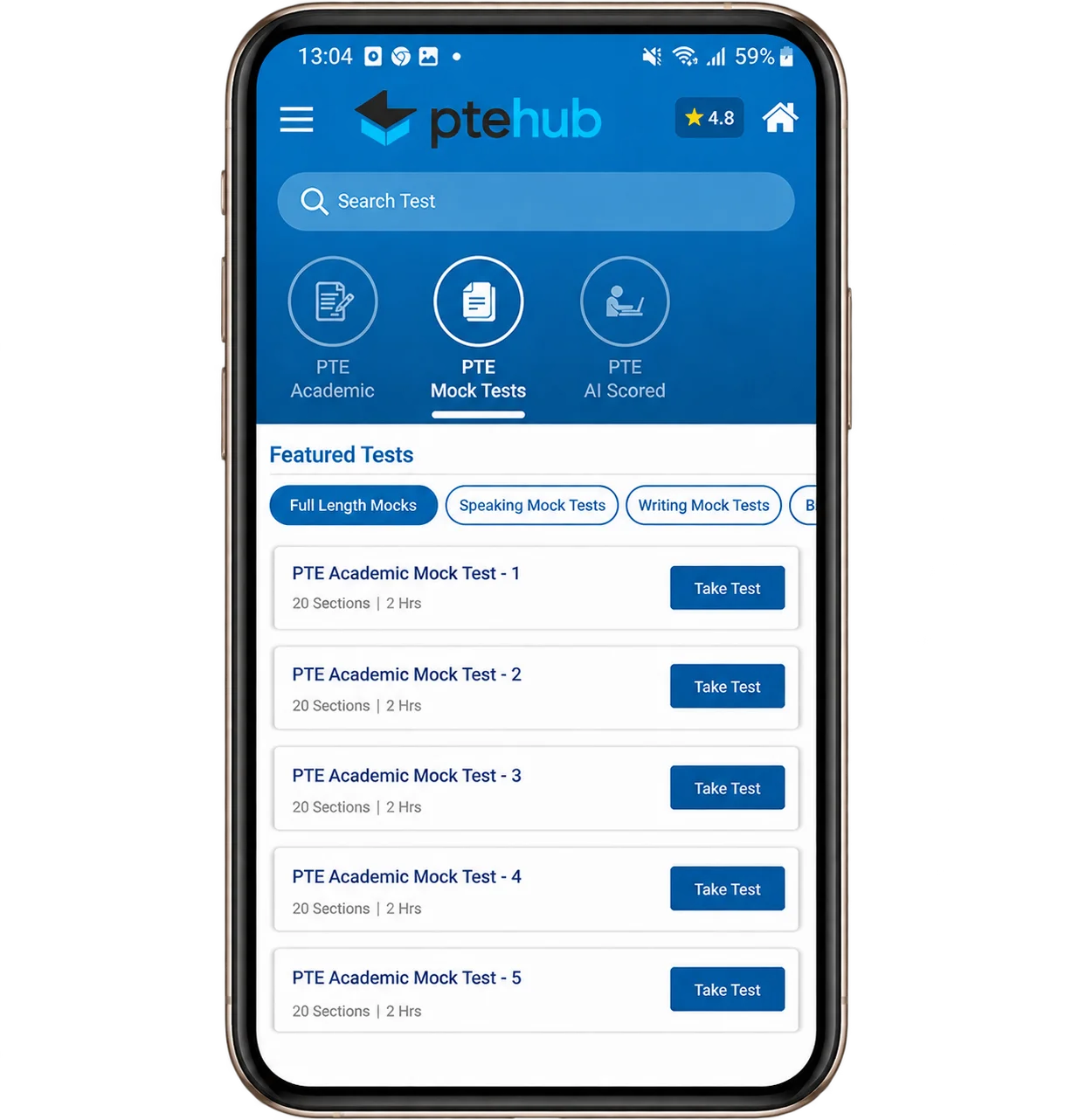

Practice on the PTEHub App

Prepare anywhere, anytime with real exam-like questions, instant AI scoring, and detailed performance insights directly on your mobile device.

PTEHub Mobile App

You May Also Like

One of the most awaited moments in the PTE Exam journey is receiving your PTE Exam result. And whatever you...

Tags:

Share:

Leave A Reply

Your email address will not be published. Required fields are marked *

PTE Accepted Universities in Canada
Planning to study in Canada and wondering which universities accept PTE Academic? PTE Academic is accepted by many Canadian universities and colleges as proof of English-language proficiency for international students.
Pearson currently states that universities and colleges across Canada accept PTE Academic for study, while individual institutions set their own admission requirements and minimum scores.
The required PTE score can vary by university, program, and level of study. For example, the University of British Columbia lists an overall PTE Academic requirement of 65 with minimum scores of 60 in each skill. In contrast, the University of Toronto lists 65 overall with no component below 60.
This guide explains PTE accepted universities in Canada, typical score requirements, PTE Academic vs PTE Core, how to check university requirements, and how to prepare for your test in 2026.

Quick Answer: Does Canada Accept PTE Academic?

Yes. PTE Academic is accepted by many Canadian universities and colleges for study applications.
Pearson says PTE Academic is accepted for study in Canadian universities and colleges, and its Canada destination information lists institutions including the University of Toronto, the University of British Columbia, and McGill University.
However, acceptance does not mean that every university or program requires the same score. You should always check the English-language requirement for your specific institution and program before sending your PTE score.
For Canadian immigration purposes, the situation is different. PTE Core, rather than PTE Academic, is the PTE test used for Canadian permanent residence and citizenship routes recognized by IRCC.

PTE Accepted Universities in Canada

The following Canadian universities publish PTE Academic requirements for English-language proficiency.

University PTE Academic requirement Important note
University of British Columbia (UBC) 65 overall Minimum 60 in Reading, Listening, Writing, and Speaking
University of Toronto 65 overall No component below 60
McGill University 65 overall Individual components 60 or better
University of Waterloo 63 overall 65 in Writing and Speaking
University of Alberta 61 overall Minimum 60 in each band
McMaster University 60 overall Minimum 60 in Writing and Speaking
Toronto Metropolitan University 60 overall Program-specific requirements may apply

These are published institutional requirements, but they should not be treated as universal scores for every program. Requirements can differ between undergraduate, graduate, and professional programs.

PTE Score Requirements for Canadian Universities

There is no single PTE score that guarantees admission to a Canadian university.
Many universities publish a minimum overall score together with minimum component requirements. This means that achieving the overall score alone may not be enough.
For example:

  • UBC: 65 overall, with at least 60 in each skill.
  • University of Toronto: 65 overall, with no component below 60.
  • McGill University: 65 overall, with individual components of 60 or better.
  • University of Waterloo: 63 overall, with 65 in Writing and Speaking.
  • University of Alberta: 61 overall, with a minimum band score of 60.
  • McMaster University: 60 overall, with minimum scores of 60 in Writing and Speaking for its undergraduate English proficiency requirement.
  • Toronto Metropolitan University: 60 for its listed undergraduate programs.

Because requirements can change, always verify the score directly on the university’s official admissions page before applying.

PTE Score for Undergraduate Admission in Canada

International students applying for bachelor’s or other undergraduate programs may be able to use PTE Academic to demonstrate English proficiency.
However, the required score depends on the university and program.
For example, UBC currently lists:

  • Overall PTE Academic: 65
  • Reading: 60
  • Listening: 60
  • Writing: 60
  • Speaking: 60

UBC also states that applicants must achieve these minimum scores in a single sitting.
McMaster University currently lists 60 overall, with minimum scores of 60 in Writing and Speaking for its undergraduate English proficiency requirement.
Therefore, students should not assume that one PTE score applies to every Canadian undergraduate program.

PTE Score for Master’s and Graduate Programs in Canada

Graduate programs can have different English-language requirements from undergraduate programs.
For example, the University of Alberta’s Faculty of Graduate & Postdoctoral Studies lists a minimum PTE Academic score of 61 overall with a minimum band score of 60. However, individual departments can require higher scores.
Toronto Metropolitan University lists 63 PTE Academic as its general graduate requirement, while some programs have higher requirements. For example, its published 2026 graduate requirements list 68 for some MBA and management programs and 72 for Journalism.
This is why students applying for an MS, MBA, or another graduate qualification should check the requirements for the exact program rather than relying only on the university-wide minimum.

PTE Score for MBA in Canada

MBA programs can have additional admission requirements, including higher English-language scores.
For example, Toronto Metropolitan University’s 2026 graduate admission information lists a 68 PTE Academic requirement for its MBA and certain other programs.
Other Canadian business schools may publish different requirements.
If you are applying for an MBA, check:

  1. The university’s general English-language requirement.
  2. The MBA program’s specific requirement.
  3. Academic eligibility.
  4. Work experience requirements, if applicable.
  5. Application deadlines.
  6. Any additional documents required by the business school.

Meeting the English-language minimum does not by itself mean that you will be admitted.

PTE Academic vs PTE Core for Canada

One of the most important things to understand before taking the test is the difference between PTE Academic and PTE Core.

PTE Academic

PTE Academic is designed for academic English and is used by universities and colleges for study applications. Pearson states that PTE Academic is accepted by Canadian universities and colleges.
If your goal is to study at a Canadian university or college, PTE Academic is the relevant PTE test to check with your institution.

PTE Core

PTE Core is a general English test designed for Canadian immigration and citizenship purposes.
Pearson states that PTE Core is recognized by the Canadian government for Canadian permanent residence and citizenship applications.

Your goal PTE test to check
Study at a Canadian university PTE Academic
Study at a Canadian college PTE Academic
Canadian permanent residence PTE Core
Canadian citizenship PTE Core

Do not choose a test simply because both contain the name “PTE.” Always confirm which test your institution or immigration program requires.

Is PTE Academic Accepted for a Canadian Study Permit?

PTE Academic acceptance by a university and study-permit requirements are two separate considerations.
To study in Canada, most international students need a study permit. Canada requires a letter of acceptance from a Designated Learning Institution (DLI) when applying for a study permit.
The Canadian government maintains an official DLI list that allows students to check whether an institution is designated to host international students.
Therefore, your process generally involves:
Choose a program → Check PTE acceptance → Meet academic and English requirements → Receive your Letter of Acceptance → Check study-permit requirements → Apply for your study permit
PTE acceptance alone does not guarantee admission or a study permit.

PTE Acceptance Does Not Mean Guaranteed Admission

Finding your university on a list of PTE accepted universities in Canada is only the first step.
Universities can consider several admission requirements, including:

  • Academic qualifications
  • Previous study
  • Program prerequisites
  • English-language proficiency
  • Application documents
  • Program-specific requirements
  • Application deadlines
  • Available places

For example, Toronto Metropolitan University explicitly notes that meeting minimum requirements does not guarantee admission and that individual programs may have additional requirements.
Therefore, think of the PTE score as one part of your university application, not the only admission criterion.

How to Check Whether a Canadian University Accepts PTE

Before booking your PTE test, follow these steps.

1. Choose Your University

Start with the universities and programs you are interested in.

2. Check the Official Admission Page

Go to the university’s official admissions website and find its English-language proficiency requirements.

3. Look for PTE Academic

Check whether Pearson Test of English Academic (PTE Academic) is listed among the accepted English tests.

4. Check the Required Score

Look for:

  • Overall PTE score
  • Reading requirement
  • Listening requirement
  • Speaking requirement
  • Writing requirement

5. Check Program-Specific Requirements

Some programs may require a higher score than the general university requirement.

6. Check Score Validity

Confirm how recently the test must have been taken.

7. Send Your Official Score

Follow the university’s instructions for submitting your PTE result.
For example, the University of Toronto requires PTE results to be submitted electronically through the MyPTE account.

How to Check Your PTE Score Before Applying

Before sending your score to universities, you can use a PTE score calculator to understand your overall score and skill-level performance.
Remember that universities may look at both the overall score and individual skill requirements.
For example, if a university requires 65 overall with no skill below 60, scoring 65 overall is not enough if one of your individual skills is below 60.

PTE Score Requirements Can Vary by Program

One of the most common mistakes students make is assuming that every program at a university has the same PTE requirement.
In reality, requirements can vary by:

  • University
  • Faculty
  • Degree level
  • Course
  • Professional program
  • Graduate program
  • Undergraduate program

For example, Toronto Metropolitan University lists different graduate PTE requirements for different groups of programs, including higher requirements for some MBA, management, and Journalism programs.
Always check the exact program page before deciding what PTE score to target.

How to Prepare for PTE Academic for Canadian Universities

Once you know the score requirement for your target university, create a preparation plan around that target.

Understand the PTE Test Format

PTE Academic assesses:

  • Speaking
  • Writing
  • Reading
  • Listening

The test is scored on a 10–90 scale, and your score report includes an overall score and skill-level results.
Understanding the format before practising can help you identify which areas require the most attention.

Use PTE Preparation Materials

Use reliable PTE preparation materials to practise question types, understand the test format, and build familiarity with the exam.

Take a PTE Practice Test

A PTE practice test can help you understand your current performance before taking the actual examination.
Use your results to identify areas that need more practice instead of repeatedly taking tests without reviewing your mistakes.

Practise PTE Online

Regular PTE practice online can help you build consistency across Speaking, Writing, Reading, and Listening.
Try to combine individual question practice with timed practice so that you become comfortable working under exam conditions.

Use Full-Length PTE Mock Tests

Once you understand the question types, add PTE mock tests to your preparation.
Full mock tests can help you practise:

  • Time management
  • Section transitions
  • Test stamina
  • Question timing
  • Overall performance tracking

Consider an Online PTE Course

If you prefer structured preparation, a PTE online course can provide a more organised study path.
The right preparation approach depends on your current score, target score, available study time, and the requirements of your target university.

How Much PTE Score Should You Aim for Canada?

There is no single PTE score that applies to every Canadian university.
Instead, start with the requirement for your specific program.
For example:

  • If your university requires 60, make sure you can consistently achieve at least the required score in practice.
  • If it requires 65 overall and 60 in every skill, monitor both your overall score and individual skills.
  • If your program requires a higher score, build your preparation around that specific requirement.

It can also be useful to compare your target with other English-language tests using a complete PTE score comparison before deciding which test is appropriate for your application.

Common Mistakes When Choosing PTE for Canada

Mistake 1: Choosing PTE Core for University Admission

PTE Core and PTE Academic are different tests.
PTE Core is intended for Canadian immigration and citizenship routes, while PTE Academic is the test used for university study applications.

Mistake 2: Checking Only the Overall Score

A university may have minimum requirements for individual skills.
For example, UBC requires 65 overall and 60 in each skill.

Mistake 3: Assuming Every Program Has the Same Requirement

Different programs can have different English-language requirements.

Mistake 4: Using an Outdated University Requirement

Admission requirements can change.
Always check the university’s current official website before submitting your application.

Mistake 5: Assuming PTE Acceptance Guarantees Admission

PTE is only one part of the admission process. Academic qualifications and program-specific requirements still apply.

Mistake 6: Confusing University Acceptance With Immigration Requirements

University admission and Canadian immigration are separate processes.
For study permits, you also need to meet the applicable IRCC requirements, including requirements related to your designated learning institution and application documents.

PTE Accepted Universities in Canada: Quick Checklist

Before applying, check the following:

  • Does my university accept PTE Academic?
  • Does my specific program accept PTE Academic?
  • What is the required overall PTE score?
  • Are there minimum Reading, Writing, Speaking, or Listening scores?
  • Does my graduate or undergraduate program have a different requirement?
  • Is my PTE score still valid?
  • How does the university want me to submit my score?
  • Is the institution listed as a DLI?
  • Have I checked the latest study-permit requirements?
  • Am I preparing for PTE Academic rather than PTE Core for university study?

Conclusion

PTE Academic is accepted by many universities and colleges in Canada, making it an option for international students who need to demonstrate English-language proficiency for study.
However, the required score depends on the university and program. Current published examples include 65 at UBC, 65 at the University of Toronto, 65 at McGill, 63 at Waterloo, 61 at the University of Alberta, 60 at McMaster, and 60 at Toronto Metropolitan University, with some institutions and programs requiring minimum scores in individual skills or higher scores for specific programs.
If your goal is to study in Canada, check your exact university and program requirements, make sure you are taking PTE Academic rather than PTE Core, and prepare around the score and individual skill requirements published by your institution.

Frequently Asked Questions

Which universities accept PTE in Canada?

Many Canadian universities accept PTE Academic for English-language proficiency. Examples include the University of Toronto, University of British Columbia, McGill University, University of Waterloo, University of Alberta, McMaster University, and Toronto Metropolitan University. Requirements vary by institution and program.

What PTE score is required for Canadian universities?

There is no single required score. Published examples range from 60 to 65 overall at several major universities, but some programs require higher scores or minimum component scores. Always check your specific program.

Is PTE Academic accepted in Canada for international students?

Yes. PTE Academic is accepted by many Canadian universities and colleges for study applications. Pearson states that PTE Academic is accepted for study in Canadian universities and colleges.

Is PTE Academic or PTE Core required for studying in Canada?

For university or college study, PTE Academic is the relevant PTE test to check. PTE Core is designed for Canadian immigration and citizenship routes.

Is PTE 65 enough for Canada?

A PTE score of 65 may meet the English-language minimum at some Canadian universities, but it does not apply universally. Some institutions require minimum component scores, while certain programs may require higher scores.

Can I use PTE for a Canadian study permit?

Your university’s acceptance of PTE and the Canadian study-permit process are separate matters. You generally need a Letter of Acceptance from a Designated Learning Institution and must meet the applicable study-permit requirements.

Does PTE acceptance guarantee university admission in Canada?

No. Meeting the English-language minimum is only one part of an application. Universities can have additional academic and program-specific requirements.

How long is a PTE Academic score valid?

Check the score-validity requirements of your university and application because institutions can specify how recent test results must be. Do not assume that an older score will automatically be accepted.

Tags:

Share:

Leave A Reply

Your email address will not be published. Required fields are marked *